Home / Accessories / Photomanipulation / Rapp OptoElectronic GmbH
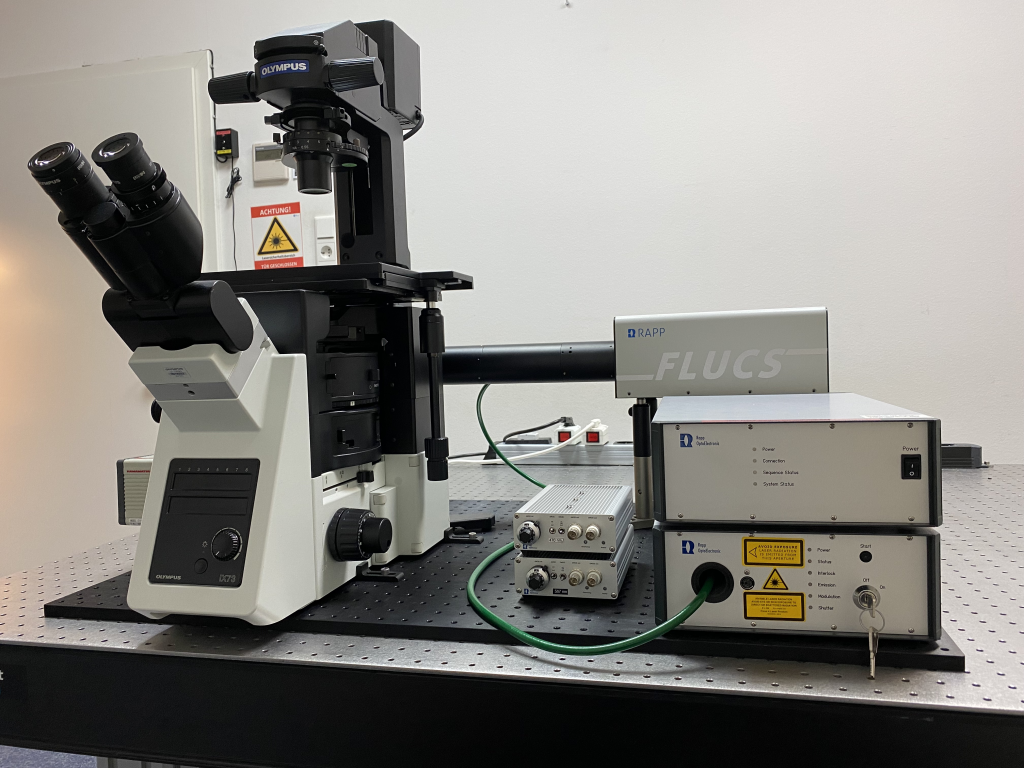
Rapp OptoElectronic GmbH | FLUCS Micro Flow Photomanipulation
Rapp OptoElectronic GmbH
Rapp OptoElectronic GmbH | FLUCS Micro Flow Photomanipulation
Rapp OptoElectronic GmbHKronskamp 110
22880 Wedel
Germany/Deutschland
Phone/Tel: +49 4103 701890
Fax: +49 4103 7018921
Mail:
WEB: www.rapp-opto.com
Quote request
ManufacturerRapp OptoElectronic GmbH
The request is sent to the manufacturer. The request is sent directly.
Description
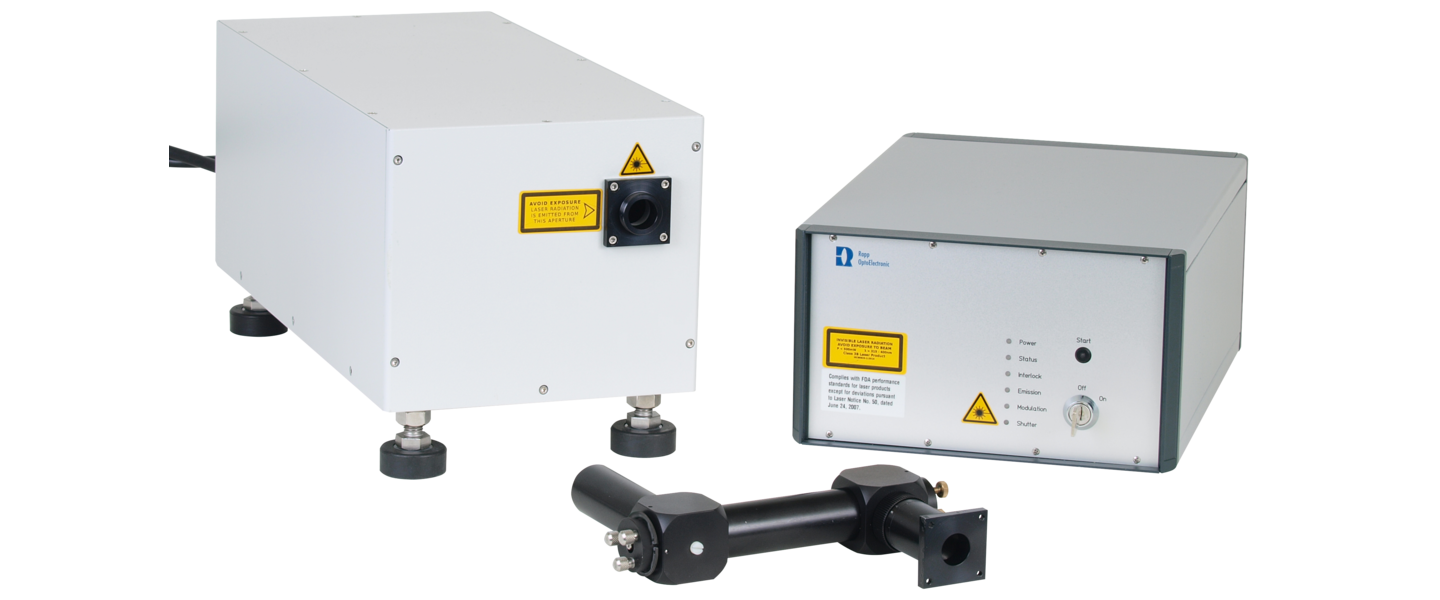
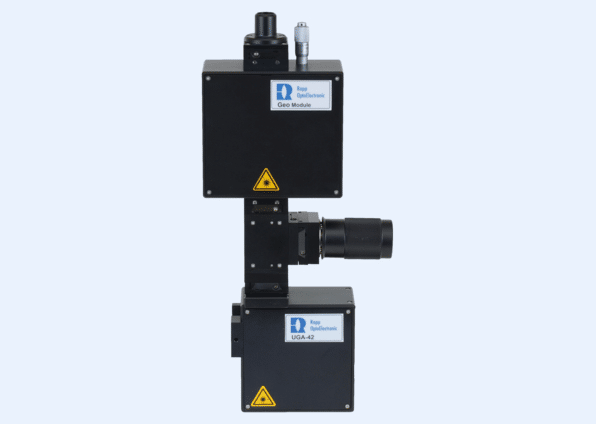
With FLUCS photomanipulation, the non-invasive and flexible control of microscopic flows, we offer the microscopist a completely new tool to manipulate the sample. Active transport by fluid flows is a hallmark of many living microscopic systems, and the ability to actively control intracellular motion can add an entirely new dimension to life science research.
COOPERATION

The FLUCS photomanipulation system for microscopic flows has been developed based on a close scientific cooperation with Moritz Kreysing and his research group at the Max-Planck-Institute of Molecular Cell Biology and Genetics (MPI-CBG) in Dresden, Germany. Patents pending.
THERMO-VISCOUS FLOW
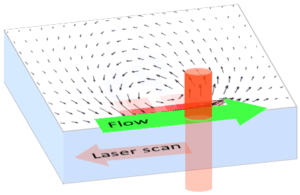
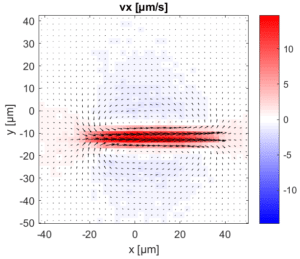
By moderately heating the specimen with a rapidly scanned infrared laser spot, directed fluid flows are induced. By flexibly designing the scan path of the laser, fluid is pumped along prespecified paths in the focal plane of a microscope. For optimal performance in aqueous solutions, the wavelength of the IR laser is optimized for the absorption spectrum of water.
FLOW SPECIFICATIONS
| VARIABLE | UNIT | MIN | TYPICAL | MAX |
|---|---|---|---|---|
| FLOW VELOCITY U | µm/s | 0 | 10 | 100 |
| SPECIMEN THICKNESS D | µm | 5 | 30 | 200 |
| TEMPERATURE INCREASE ΔT | K | 0 | 5 | 50 |
| SPATIAL EXTENT OF FLOW PATTERN L | µm | 5 | 30 | 200 |
BASIC AND COMPOUND FLOW PATTERNS
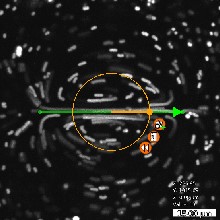
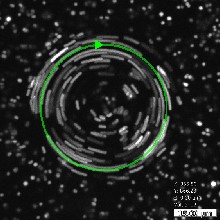
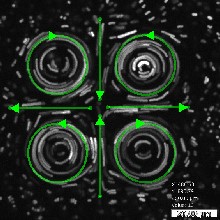
Flow patterns are directly defined in the current camera image. The speed of the flow is controlled by adjusting laser power and scan frequency. Temporal control has microsecond accuracy and can be embedded in complex experimental protocols.
APPLICATIONS
- Cell biology
- Cytoplasmatic streaming: Invert PAR domains in c. elegans embryo
- Local rheology measurement in cell
- Probe material properties of centrosomes with flow perturbations
- Hydrodynamic trapping and force measurement
- Localized temperature gradients
- Biophysics
- Intra-cellular transport through advective micro flows, reaction-advection-diffusion systems
- Hydrodynamic trapping of cells, colloids, or particles
- Microfluidics
- Flow pumping in micro channels
- Efficient micro-mixer, time-dependent flow
- Droplet based micro fluidics
- Sorting and selecting of colloids, cells or droplets
- Medical research
- Sorting and handling of individual cells
- Sorting and handling of individual cells
REFERENCES
- I.D. Stoev, B. Seelbinder, E. Erben, N. Maghelli, M. Kreysing (2021): Highly sensitive force measurements in an optically generated, harmonic hydrodynamic trap, eLight 1:7. https://doi.org/10.1186/s43593-021-00007-7
- E. Erben, B. Seelbinder, I.D. Stoev, S. Klykov, N. Maghelli, M. Kreysing (2021): Feedback-based positioning and diffusion suppression of particles via optical control of thermoviscous flows, Optics Exp., Vol. 29, No. 19, 30272. https://doi.org/10.1364/OE.432935
- N.T. Chartier, A. Mukherjee, J. Pfanzelter, S. Fürthauer, B.T. Larson, A.W. Fritsch, R. Amini, M. Kreysing, F. Jülicher, S.W. Grill (2021): A hydraulic instability drives the cell death decision in the nematode germline, Nat. Physics, Vol 17, 920-925. https://doi.org/10.1038/s41567-021-01235-x
- M. Mittasch, V.M. Tran, M.U. Rios, A.W. Fritsch, S.J. Enos, B. Ferreira Gomez, A. Bond, M. Kreysing, J.B. Woodruff (2020): Regulated changes in material properties underlie centrosome disassembly during mitotic exit, J. Cell Biol., Vol 219(4). https://doi.org/10.1083/jcb.201912036
- M. Kreysing (2019): Probing the Functional Role of Physical Motion in Development, Dev. Cell 51. https://doi.org/10.1016/j.devcel.2019.10.002
- M. Mittasch, P. Gross, M. Nestler, A.W. Fritsch, C. Isermann, M. Kar, M. Munder, A. Voigt, S. Alberti, S.W. Grill, M Kreysing (2018): Non-invasive perturbations of intracellular flow reveal physical principles of cell organization, Nat. Cell Biology. https://doi.org/10.1038/s41556-017-0032-9
Phone +49 4103 701890
Mail